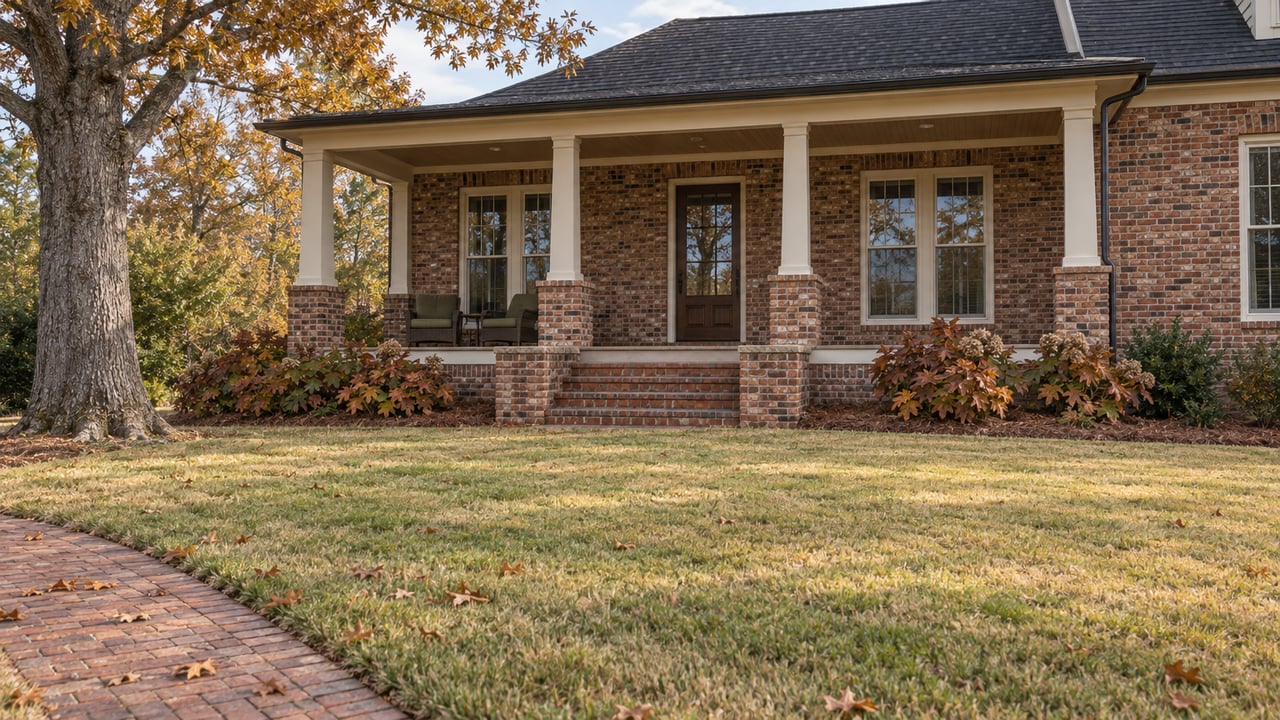
The Dock Comes With Conditions: What a TVA Permit Means When You Buy on Wilson Lake in Killen
"TVA shall reissue the permit upon determining that the facilities are in good repair and are consistent with the standards in effect at the time the permit was first issued."
That sentence comes from the Tennessee Valley Authority's Section 26a rules. Every buyer of a lakefront home in Killen should read it before an offer goes in. A dock, pier or boathouse on Wilson Lake isn't simply part of the house. It's a structure TVA approved for a particular owner, under the standards in force on the day TVA first approved it. When the house changes hands, the approval has to change hands too, and the new owner has to start that process.
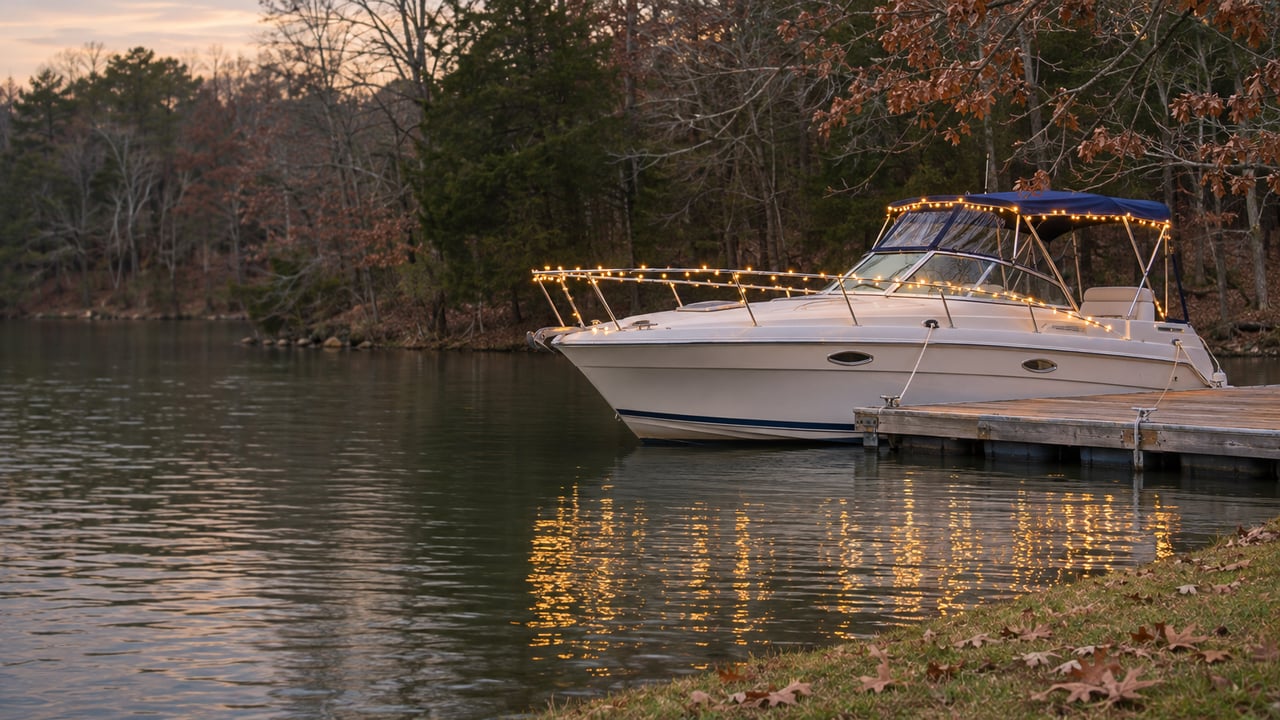
So the dock in the listing photos is really a permit history. That history can tell you how big the dock is allowed to be, whether you can rebuild it, and how much shoreline you can clear around it.
TVA's change-of-ownership rule says that when the land under a permitted facility is sold, the new owner must notify TVA within 60 days. The same rule covers docks on TVA-owned land. In that case it's the sale of the adjoining lot, the one that made the original owner eligible for the permit, that sets the requirement in motion.
The rule also gives the buyer some breathing room. In TVA's words, "Upon application to TVA by the new owner, the new owner may continue to use existing facilities or carry out permitted activities pending TVA's decision on reissuance of the permit."
In practice, you can keep using the dock while TVA reviews it, as long as you've applied. Reissuance turns on two tests in the rule:
That second condition protects older docks. The rule goes on to say that later owners don't have to modify existing facilities that were built and maintained under the original standards, as long as they keep those facilities in good repair and get TVA approval for certain repairs and new work. A dock built legally under older standards can generally stay as built, provided it matches what was permitted and is kept in good repair.
On most purchases, a sagging walkway or a few rotted deck boards are something you negotiate over. On Wilson Lake, they also bear on whether TVA reissues the permit, because "good repair" is one of the two tests in the reissuance rule.
TVA's enforcement section shows what's at stake if a structure is unauthorized, unsafe, derelict or out of compliance. After written notice, the owner has 90 days to fix the problem. If it isn't fixed, TVA can cancel its approval and remove the structure, and the owner is charged for the removal.
Repairs have limits too. Under TVA's Section 26a regulations, repairs that would change a facility's size or create a structural modification need TVA approval, and so does any new construction. A buyer who plans to enlarge a dock, add a boathouse roof or replace the structure is planning a new permit application, which is more than a weekend project.
Timing matters for sellers who got a permit but never built. A Section 26a permit expires if construction doesn't begin within 18 months of the date it was issued. If a listing mentions an approved dock that hasn't been built yet, the issue date on that approval matters.
The permit is half the picture. The other half is who owns the strip of land between the yard and the lake, and TVA's rules handle each kind of ownership differently.
| Shoreline situation | Docks and boathouses | Clearing trees and brush |
|---|---|---|
| TVA-owned residential access shoreland | Permit required before building | Advance written permission and an approved vegetation management plan required. Access corridor up to 20 feet wide, and no tree cutting in the 50-foot shoreline management zone outside what TVA pre-approves in the corridor |
| Private land under a TVA flowage easement | Counts as a Section 26a obstruction, so TVA approval is needed | Generally no TVA approval needed, subject to resource-protection conditions |
| Private land to the water's edge | TVA approval still required for docks, boathouses and shoreline stabilization | Depends on the deed and any easement language |
This explains why two Killen lots on the same cove can look so different from the water. On TVA-owned shoreland, mowing is allowed only inside the access corridor, and the forest floor elsewhere is supposed to stay undisturbed. Lawns that were already established and mowed before Nov. 1, 1999 are the exception. A buyer who pictures clearing a wide view to the lake needs to know which kind of land sits below the house.
Some subdivisions leave a gap in ownership. TVA's rules recognize cases where private land was divided in a way that left an intervening strip between the flowage easement and the water, or where the land under the water was never conveyed to the lot owner. In those cases, TVA may approve a facility only if the owner of that strip doesn't object. The rule is direct about it: "A TVA permit conveys no property interest," and "TVA is not responsible for resolving ownership questions." If there's a dispute, TVA may require the parties to get a court order declaring their land rights.
Under TVA's dock size rules, a residential dock, pier, boathouse and every other water-use facility on a lot together can't exceed a 1,000-square-foot footprint. The cap rises to 1,800 square feet in areas of "preexisting development." TVA defines that term with a date. A lot qualifies if it's in a subdivision recorded before Nov. 1, 1999 where TVA had already permitted at least one water-use facility before that date. Outside a subdivision, a lot qualifies if it's within a quarter mile of another facility TVA permitted before Nov. 1, 1999.
Two waterfront lots in Killen with similar frontage can therefore come with different dock rights, depending on when the subdivision plat was recorded and whether a permitted dock was already nearby. The walkway out to the structure isn't counted in the footprint. For buyers hoping to fit a boathouse and a sitting deck on one lot, the 800-square-foot gap between those two caps can decide whether both fit or only one does.
A few more limits apply on every lot:
Buyers touring in the fall see the lake on its way toward winter levels, and the reservoir you're comparing makes a difference. TVA's 2026 operating guide for Wilson shows a summer band of 506.2 to 507.7 feet, with the lower winter target returning to 504.7 feet on Dec. 16, 2026. At most, that's about a three-foot spread between the bottom of the winter band and the top of the summer band.
Pickwick, just downstream, moves more. Its 2026 guide shows 413 to 414 feet in summer and 408 to 410 feet in winter, and the band started dropping on Sept. 9, 2026. TVA's drawdown page explains that main-river reservoirs are held lower until "late April or early May" because flood-storage space is limited. The operating guides are target zones, not guaranteed daily levels.
For a Killen buyer, a dock seen in November shows its cold-season conditions, and Wilson's smaller swing keeps those conditions closer to summer than they would be on Pickwick. Out on the water, the Locke Six boat ramp, formerly called Locke Six canal according to Visit Florence, is a well-known public launch on Wilson Lake in Killen.
The permit history is a set of documents, and most of it can be collected during the contract period.
Both Wilson and Pickwick fall under TVA's Muscle Shoals, Alabama Region. For questions, TVA directs people to its Public Land Information Center at [email protected] or 1-800-882-5263. Applications can be submitted through TVA's online system or addressed to TVA at the office listed on the application.
What does a TVA dock application cost? Fees are set under 18 CFR Part 1310, which gives a range of $100 to $5,000 for a Section 26a obstruction plan and describes the charges as roughly equal to TVA's administrative cost. TVA discloses the applicable fee in the application materials, and an application isn't complete until it's paid.
Is a residential dock a minor or major project? TVA treats most residential docks, piers, boathouses and shoreline stabilization of 500 feet or less as minor. Stabilization longer than 500 feet is major. A request for a variance from the residential size limits is reviewed as a major facility.
Can I clear brush along the shoreline? That depends on who owns the land. On TVA-owned shoreland, you can clear poison ivy, Japanese honeysuckle, kudzu and other listed exotic plants, but most other vegetation work needs TVA's advance written permission.
All of this is general information drawn from TVA's published rules. It isn't legal advice, so confirm your own parcel and permit situation with TVA, a real estate attorney or a title professional.
At Fernhill Realty Shoals, we're glad to walk the shoreline with you before you make an offer on a Wilson Lake home. We'll help you pull together the permit, plat and deed questions so you know what comes with the dock. Contact Us when you're ready to start.
Shoals
Here's the full breakdown I walk every Florence, Killen, and Muscle Shoals seller through before we list.

Shoals
Choosing the right agent is one of the most important decisions you'll make when buying or selling.

Shoals
So instead of trying to predict the future, let's talk about what buyers should actually be paying attention to.
Helping you find your place in Alabama. We’re here to lift up the veil on homeownership and support buyers and sellers every step of the way, advocating for their best interests so they can enjoy the process knowing they’re in excellent hands!

FERNHILL REALTY SHOALS
1215 E Chisholm Rd Florence, AL 35630